Skip to content
MedScope360 MedScope360

Showing prices in USD for United States. Titles without an international price are not listed.

Sign in

CLINICAL HANDBOOK OF MINOR SURGERY

Surgery · Ebook

CLINICAL HANDBOOK OF MINOR SURGERY

Description

CLINICAL HANDBOOK OF MINOR SURGERY 

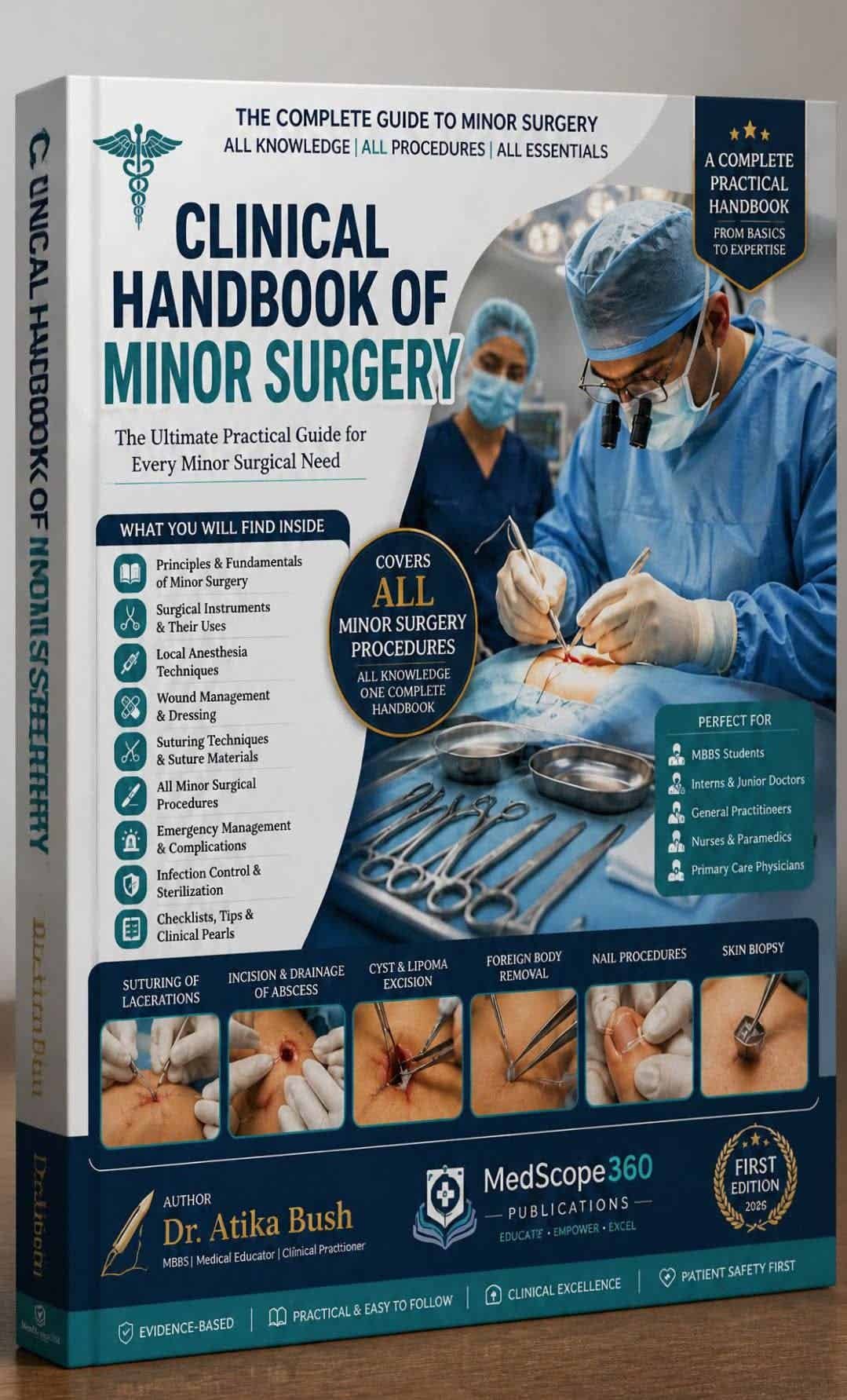
A practical educational ebook designed to help medical students, interns and healthcare professionals understand commonly performed minor surgical procedures and their basic clinical management.

Topics Covered:

Introduction to minor surgery
Patient assessment before procedures
Preparation of the surgical site
Aseptic techniques and infection prevention
Local anesthesia techniques
Wound assessment and classification
Wound cleaning and irrigation
Suturing techniques and suture materials
Wound closure methods
Incision and drainage of abscesses
Management of minor cuts and lacerations
Dressing techniques and wound care
Removal of sutures
Management of minor burns
Post-procedure care and follow-up
Common complications and their prevention
Emergency signs requiring referral

Who Can Benefit?

Medical students
Interns and junior doctors
General practitioners
Healthcare professionals
Clinical skills learners

Key Features:

Practical clinical explanations
Step-by-step procedural learning
Important precautions and safety measures
Clinical tips and revision points
Important Note: This ebook is intended for educational purposes. Surgical procedures should only be performed by appropriately trained professionals with proper supervision, sterile equipment and patient consent.

Reviews

Feedback from students who purchased this product

No reviews yet. Be the first to review this product.

Frequently Asked Questions

Questions about this product?

Everything you need to know about access, format, and updates.

It covers minor surgical procedures, wound management, suturing, local anesthesia, incision and drainage, dressing techniques and post-procedure care.
Medical students, interns, junior doctors, general practitioners and healthcare professionals can use it as a learning resource.
Yes. It introduces common suturing methods, suture materials and basic wound closure principles.
Yes. It discusses wound assessment, cleaning, irrigation, dressing methods and follow-up care.
Yes. It covers the basic principles of incision and drainage of abscesses for educational learning.
Yes. It can help learners revise minor surgery concepts, procedural steps, precautions and common complications
No. Reading alone is not sufficient. Procedures require appropriate clinical training, supervised practice, patient consent and adherence to safety protocols.

You may also like

View all